
Home / Blog / Grammar Checker: Fix Grammar and Spelling Free
Grammar Checker: Fix Grammar and Spelling Free
Every writer makes grammar mistakes — even professional editors miss things on a first pass. The difference is that professionals usually have a second pair of eyes. For the rest of us, a Grammar Checker plays that role: it scans your text in seconds and flags the errors your brain glides right over.
A free online grammar checker does not write for you. It does not think for you. What it does is far more practical: it catches the small, embarrassing errors that undermine otherwise good writing — a missing article here, a mismatched verb there, a comma that landed in the wrong place. This guide explains exactly what a grammar checker fixes, how to use one properly, and why you should always give your text one final read yourself.
What Does a Grammar Checker Actually Fix?
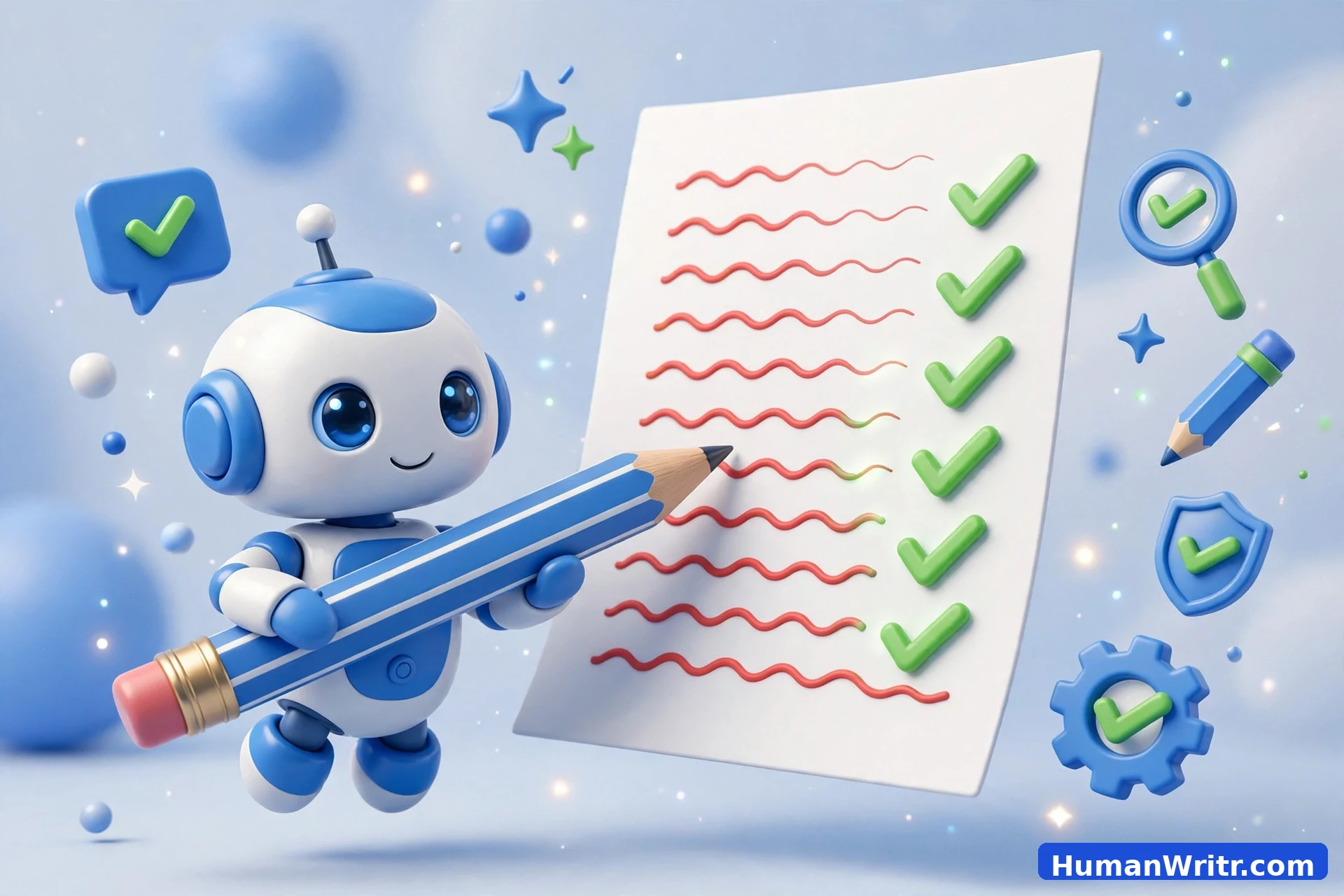
A good grammar checker works on three levels at once: grammar, spelling, and punctuation. That is what "fix all issues in one click" really means — instead of hunting through your text three separate times, the tool scans everything together and presents every correction at once.
Here are the most common mistakes it catches:
- Articles (a, an, the): Writing "a apple" instead of "an apple," or dropping the article entirely — "He is teacher" should be "He is a teacher." Article errors are the number-one grammar problem for non-native English writers, and they are nearly invisible to the person who wrote them.
- Subject-verb agreement: "The list of items are long" should be "The list of items is long." Long sentences make it easy to lose track of which noun the verb belongs to.
- Punctuation spacing: Spaces before commas, missing spaces after periods, double spaces between words. These look sloppy in professional writing and take a trained eye to catch in a long document.
- Capitalization: Sentences that start with a lowercase letter, proper nouns written in lowercase, or random capital letters in the middle of a sentence.
- Repeated words: Accidental doubles like "the the" or "I I think" — extremely common when typing fast, and oddly hard to spot when reading your own draft.
The key thing to understand is that a grammar checker is pattern-based. It compares your sentences against known rules and flags what breaks them. It does not understand your argument, your tone, or your intent — which is exactly why it is a helper, not a replacement for your judgment.
Who Needs a Grammar Checker Most?
Short answer: everyone who writes. But three groups benefit the most:
- Students: Essays, assignments, and applications are graded partly on language quality. Small grammar errors can make a strong argument look weak. Running your draft through a checker before submitting is one of the highest-return habits a student can build — it is also covered in our student guide to making essays sound human.
- Professionals: Emails, reports, proposals, and LinkedIn posts are judged by people who notice mistakes. A grammar checker takes ten seconds and protects you from the kind of typo that gets forwarded around the office.
- Non-native English writers: If English is your second or third language, articles, prepositions, and verb tenses are where errors cluster. A checker acts like a patient tutor that never gets tired of pointing out the same patterns — over time, you will start catching them yourself.
Even native speakers benefit. Fast typing produces a steady stream of small errors — transposed letters, missing words, autocorrect accidents. A checker catches the mechanical stuff so your brain can focus on the actual message.
How to Use the Grammar Checker
Using the tool is deliberately simple. Here is the exact process:
- Step 1. Open the Grammar Checker page in your browser.
- Step 2. Paste your text into the input box — or type directly. There is no signup and no word limit to worry about for normal use.
- Step 3. Click Fix All Issues. The tool scans for grammar, spelling, and punctuation problems in one pass.
- Step 4. Review the corrected version. Issues are listed so you can see exactly what changed and why.
- Step 5. Copy the fixed text with one click and use it wherever you need it.
The whole process takes under a minute for most documents. For longer texts, it is often better to check section by section — that keeps the review step manageable and stops you from approving changes blindly.
The Honest Truth: Always Re-Read Your Text
Here is something most grammar tool websites will not tell you: no grammar checker is perfect. Rules-based tools occasionally misread context. They can flag a sentence that is actually correct, or miss an error that requires understanding the meaning of a paragraph.
The most common failure points are:
- Style choices — a sentence fragment used deliberately for emphasis can be flagged as an error.
- Context-dependent meaning — "their," "there," and "they're" are all spelled correctly, so a simple spellchecker will not catch a wrong-word mix-up (though a grammar checker often will).
- Domain language — technical terms, brand names, and industry jargon may be flagged as misspellings.
The rule is simple: use the tool as a first pass, then re-read the result yourself. Read it slowly, ideally out loud. Your ear catches rhythm problems your eyes skip. The checker handles the mechanical 90% — your final read handles the judgment-based 10%. If you want help matching your writing style to the situation as well, our guide to formal vs casual tone is a useful companion.
Five Habits That Make Grammar Checkers Work Better
A grammar checker is only as good as the text you feed it. These habits get you cleaner results:
- Write the full draft first. Do not check sentence by sentence while writing — it breaks your flow. Finish the draft, then check.
- Check one section at a time. Long documents produce long lists of suggestions. Working section by section keeps you in control.
- Read every suggested change. Do not blindly accept everything. If you do not understand why the tool changed something, read the explanation — that is how you learn.
- Watch for repeat errors. If the tool keeps fixing the same thing (say, article usage), that is a signal about your weak spot. Noticing the pattern is half the battle.
- Keep your own voice. Accept corrections to errors, but do not let the tool flatten your style. If a sentence is grammatically fine and sounds like you, keep it.
Grammar Checking and Good Writing Go Together
Correct grammar does not make writing good — but incorrect grammar can make good writing look bad. Readers judge credibility fast: a proposal with three typos in the first paragraph starts at a disadvantage, no matter how strong the ideas are.
A free grammar checker removes that disadvantage. It is not a substitute for thinking clearly, structuring your argument, or choosing the right tone. It is the final polish — the thing that makes sure nothing stands between your ideas and your reader. Run your draft through the Grammar Checker, re-read it once yourself, and send it out with confidence.
Try HumanWritr — Free Forever
Fix grammar, spelling, and punctuation in one click. Free, private, no signup needed.
Fix My Grammar Free →